
English · Online made-to-measure
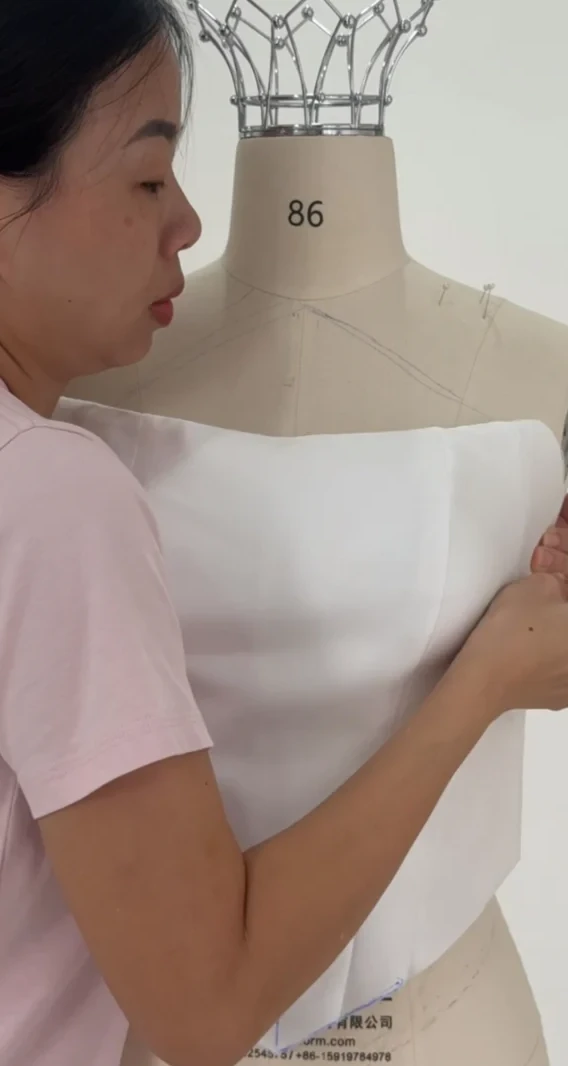
Not every line of a wedding dress can be worked out on paper. Some folds, and the twist of fabric at the waist, only appear once the material is laid on and handled directly. That is draping.
Why this step matters
Every fabric falls its own way. In the same design, satin will hang differently from lace, and machine lace differently again from French corded lace. Draping is the moment the work happens with the actual fabric that will become your dress, rather than with a drawing of it.
Why no two dresses come out the same
Every dress here has a pattern of its own, drafted to your measurements rather than taken from a stock block. Add the draping done directly on the fabric, and two brides choosing the same design still end up with two different dresses in the small lines.
The dress is sewn to those measurements with no allowance left for later alterations — which is why taking the measurements is the most important step of the whole process, before anyone touches the fabric.
Who drapes, and what you see
The dress is made by the owner of the studio herself (who sews your dress). Draping happens on the real fabric, but it still starts from your own measurements. The pattern is cut for your measurements alone, never from a stock shape, and the dress is sewn exactly to them with no extra fabric left for later alterations — which is why measuring is the most important step. When the dress is finished, before it is packed, we photograph it and send you those pictures: the finished dress, not stages of production. You can read about the step that comes before draping in the paper pattern.


